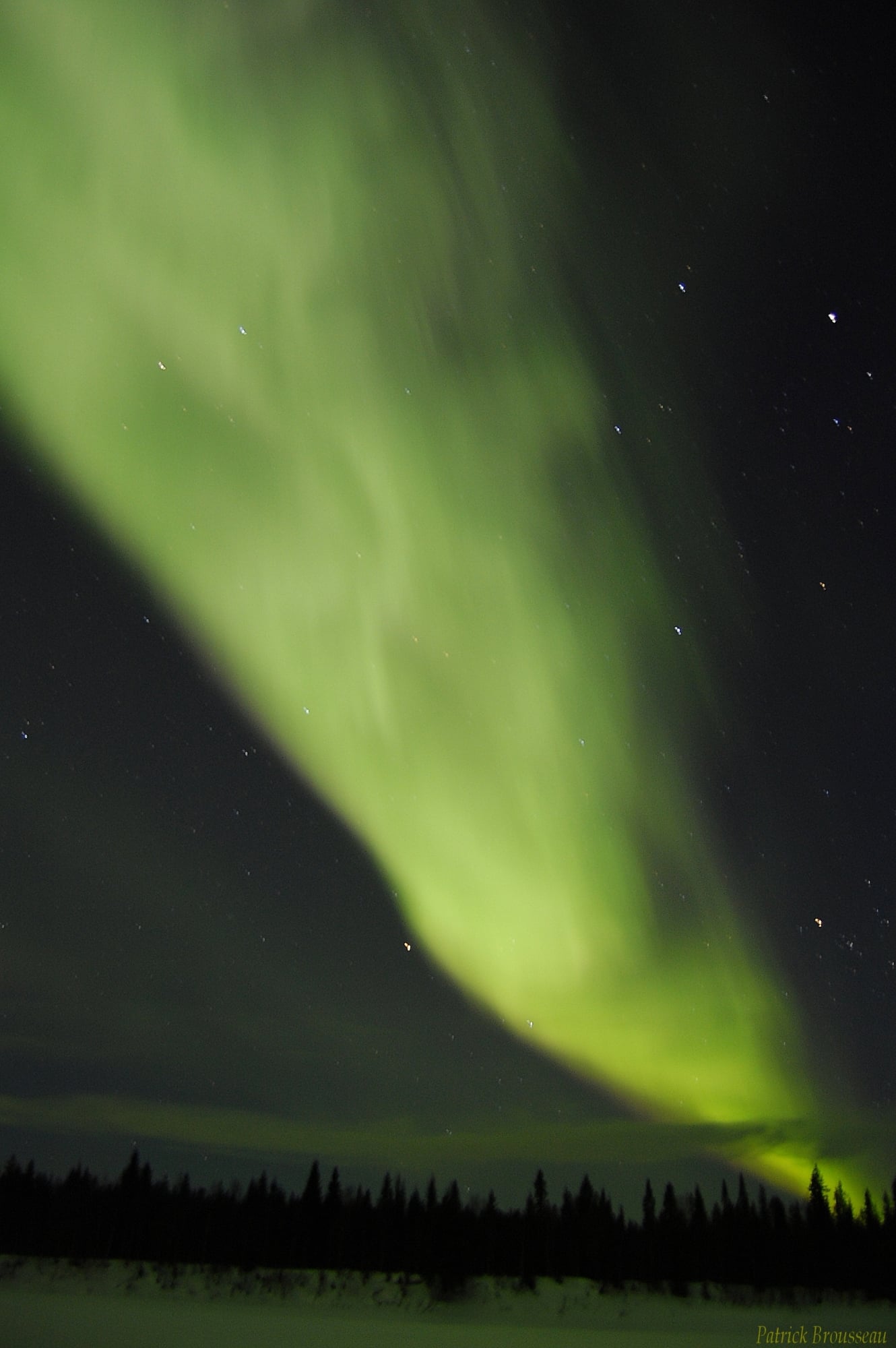
Savukoski sits deep in Eastern Lapland, far from city lights and close to some of the most untouched wilderness in Europe. If you have ever wanted to see the northern lights in Savukoski, this guide walks you through everything you need to know: when to come, what conditions to look for, how to read the forecast, and how to photograph what you see. No sighting can ever be guaranteed, but understanding the process dramatically improves your odds.
Aurora borealis is one of those experiences that rewards preparation. The sections below move from big-picture planning down to the practical details of a single night outside, so you can follow them in order or jump to the part most relevant to where you are in your planning.
Why Eastern Lapland Is Good Aurora Country
The northern lights in Savukoski are a realistic goal for any visitor, and geography is a big part of the reason. Savukoski lies well above the Arctic Circle, placing it squarely inside the auroral zone, the band of sky where geomagnetic activity most reliably produces visible displays. The municipality is one of the most sparsely populated areas in all of Europe, and roughly one third of its land is protected conservation land. That combination means almost no artificial light bleeding into the night sky.
The surrounding landscape adds practical advantages. Wide river valleys, open fells, and vast boreal forests give unobstructed views of the horizon in multiple directions, which matters when the aurora can appear low in the north or sweep overhead without warning. Aurora borealis in Eastern Lapland benefits from this openness in a way that forested or built-up locations simply cannot match. If you are already thinking about where to base yourself, browsing our cottages with a fireplace gives you a sense of the kind of wilderness setting we are talking about.
Northern Lights Season Month by Month
Choosing the right window is the single most important planning decision when it comes to the best time to see northern lights in Finnish Lapland. The aurora itself is active year-round, but you need a dark sky to see it, which limits the practical viewing season to late August through April. Within that window, conditions shift considerably from month to month.
The table below gives a general picture of what each period offers. Use it as a planning framework rather than a precise forecast, since actual conditions vary each year.
- Period: Late August to September | Darkness: Increasing rapidly as the midnight sun fades | Notes: First real dark nights return; no snow yet but the air is crisp and skies can be very clear
- Period: October to November | Darkness: Long and deepening | Notes: Snow typically arrives during this period, brightening the landscape and making night outings more comfortable; excellent aurora windows
- Period: December to January | Darkness: Maximum around the solstice | Notes: Very short days mean many hours of potential viewing time each night; the longest uninterrupted dark windows of the year
- Period: February to March | Darkness: Still long but days lengthening | Notes: Snow cover is usually reliable; cold but often stable, clear nights; a favourite period for many aurora hunters
- Period: April | Darkness: Shrinking quickly | Notes: Nights are getting lighter and the season closes toward the end of the month; early April can still produce good sightings on clear nights
If you can only visit once, December through March offers the most consistent balance of long nights and reliable snow cover. That said, some of the most dramatic displays of aurora borealis in Eastern Lapland have been reported in September and early October, when the sky is dark but the landscape still has an autumnal feel.
What Makes a Good Aurora Night
Knowing the season is step one. Understanding what has to align on any given night is step two. Two factors matter above everything else: clear skies and genuine darkness.
Clear Skies Matter Most
Cloud cover is the enemy of aurora viewing. Even a strong geomagnetic storm produces nothing visible if the sky above you is overcast. Before heading outside, check a cloud cover forecast alongside the aurora forecast. In Finnish Lapland, weather can change quickly, so check both within a few hours of your planned outing rather than the day before. If clouds move in, patience and flexibility pay off, and staying several nights gives you the best chance of catching at least one clear window.
Darkness and Light Pollution
The second factor is darkness. Light pollution washes out faint aurora displays, which is why Savukoski’s minimal artificial light is such an asset. Step away from any building lights, let your eyes adapt for at least ten to fifteen minutes, and face away from any lit windows. For the absolute darkest conditions in the region, consider an excursion to even darker skies at Tulppio in the Koilliskaira wilderness, about 70 kilometres north-east of Savukoski village and close to Urho Kekkonen National Park. The difference in sky quality at a truly dark site is striking.
How to Read the Aurora Forecast
The aurora forecast gives you the best available estimate of geomagnetic activity for the coming hours. The Finnish Meteorological Institute publishes space weather and aurora information that is reliable and updated regularly. The key number to look for is the Kp index, a scale from 0 to 9 that measures geomagnetic disturbance. At Savukoski’s latitude, Kp values of 2 or above can produce visible aurora on a clear, dark night. Higher values mean more intense and widespread activity.
Check the forecast in the early evening, then check it again around 10 pm. Aurora activity often peaks between roughly 10 pm and 2 am local time, though this varies. Do not rely on a forecast made more than 24 to 48 hours in advance, as space weather prediction becomes unreliable beyond that window. Combine the Kp forecast with a cloud cover map, and you have a practical go or no-go decision for each night. If both look promising, get outside quickly, because conditions can change within an hour.
Photographing the Aurora With a Phone or Camera
Capturing the northern lights does not require professional equipment, but it does require a few deliberate steps. Follow these in order and you will come away with images far better than a quick snapshot.
- Switch off the flash. Flash illuminates only a few metres in front of you and ruins the long exposure. Turn it off completely before you go outside.
- Select night mode or manual long exposure. Modern smartphones have a dedicated night mode that handles long exposures automatically. On a camera, set a shutter speed between 3 and 15 seconds depending on how active the aurora is, with ISO between 800 and 3200.
- Steady your phone or camera on something solid. A tripod is ideal. If you do not have one, rest the device on a fence post, a rock, or a flat surface. Any movement during the exposure will blur the image.
- Focus to infinity on a camera. Autofocus struggles in the dark. Switch to manual focus and set it to infinity, or focus on a distant light source before the aurora appears and then lock the focus.
- Keep spare batteries warm in an inner pocket. Cold temperatures drain batteries rapidly. Carry at least one spare and keep it against your body until you need it.
- Let your eyes adapt to the dark before you start shooting. Spend ten to fifteen minutes away from any light source. Your eyes will reveal far more of the aurora than they did when you first stepped outside, and you will frame your shots much more effectively.
After your first few exposures, review the images and adjust exposure time and ISO based on what you see. A fast-moving aurora needs a shorter shutter speed to avoid motion blur in the curtains; a slow, diffuse glow can handle a longer exposure for more detail.
Questions About Seeing the Northern Lights
A few questions come up repeatedly from guests planning an aurora trip. Here are straightforward answers to the most common ones.
Can You See the Aurora From the Hotel?
The open riverbank along the Kemijoki gives wide, unobstructed sky views in several directions, making it a practical spot to watch from. We do not make claims about aurora visibility from any specific room or window. Step outside onto the riverbank for the best results, and read more about where to stay in Savukoski to find the accommodation type that suits your trip.
How Cold Is an Aurora Night?
Temperatures in Eastern Lapland during the main aurora season range from just below freezing in autumn to well below minus twenty Celsius in the coldest winter months. Dress in proper layered winter clothing: a moisture-wicking base layer, an insulating mid-layer, and a windproof outer shell. Insulated boots and warm gloves are essential. The cold is very manageable with the right gear, and returning to a warm room with a sauna after a night outside is one of the great pleasures of a Lapland winter trip.
Is Spring Too Late?
Early April can still deliver good displays, but the window closes as the nights get lighter. If you are considering a spring visit, read about how the northern lights appear in spring for a more detailed look at what to expect during that transitional period.
Hunt the Aurora From Samperin Savotta
We are located on the Kemijoki riverbank in Savukoski, surrounded by the kind of dark, open wilderness that makes northern lights in Savukoski genuinely achievable rather than just a hopeful ambition. Our accommodation options range from hotel rooms to cottages with their own sauna and fireplace, giving you a comfortable base to return to after each night outside. Between aurora watches, there are plenty of daytime winter activities to keep the trip full from morning to midnight.
The single most practical piece of advice we can offer is this: book a stay of several nights. No aurora sighting can ever be guaranteed, but giving yourself four or five nights instead of one or two multiplies the chances that at least one of them will be clear, dark, and active. If you want to talk through the best dates for your plans, ask us about dates and we will help you find the window that fits. We look forward to welcoming you to Eastern Lapland.